Full-Grain Leather: Quality, Patina and Durability
Full-grain describes which part of the hide remains at the surface. It is useful information, but it is not a complete quality certificate on its own. A good belt also depends on the hide, tanning, thickness, cutting and finishing. This guide explains what the term tells you, what it does not, and what we look for at the workbench.
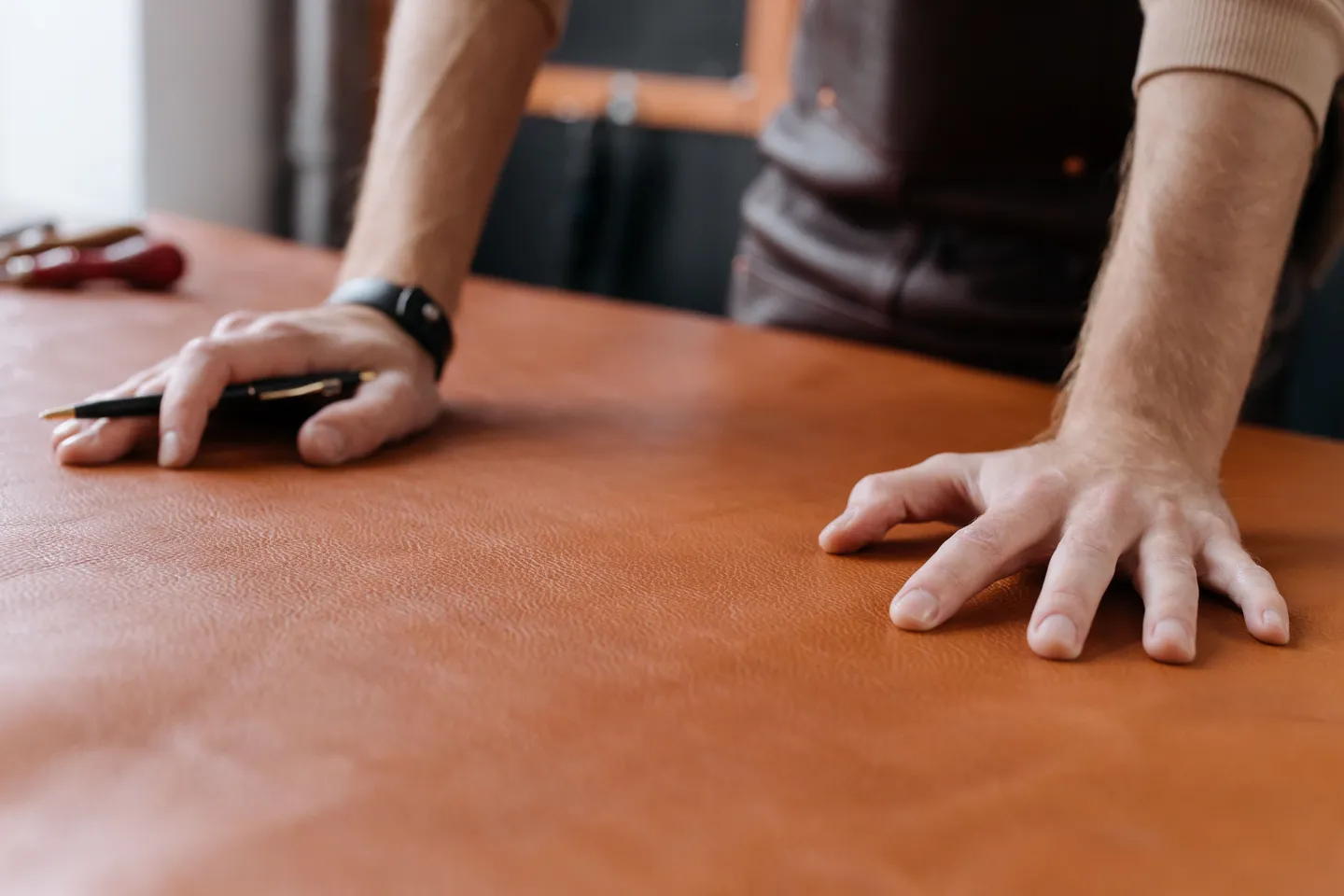
What is full-grain leather?
The grain is the dense outer surface of the hide, where the fibres are packed most tightly. Full-grain leather keeps that layer intact instead of sanding it away to create a perfectly uniform face. The pores, fine growth lines and small variations that remain are part of the original hide rather than a printed imitation of grain.
Keeping the grain matters because the transition from the dense surface into the deeper fibre structure remains continuous. In a belt, that gives the strap a firm surface while allowing it to bend repeatedly. It does not make leather indestructible, and poor tanning or careless cutting can still produce a poor piece of full-grain leather.
Full-grain, top-grain and split leather
Full-grain keeps the natural grain surface. Corrected top-grain leather comes from the upper part too, but the surface is sanded and refinished for greater uniformity. Split leather is taken from the looser layers below after the hide is divided. Each can be useful for the right product, but they do not age in the same way. On a belt that bends at the same holes every day, a dense, continuous fibre structure is especially valuable.
Why belt thickness matters
Thickness changes both structure and feel. Our belts use leather around 4 mm thick, enough to hold its shape as a single substantial strap without needing a soft core hidden between layers. Thickness alone is not quality, though. A very thick piece from a loose part of the hide can stretch more than a slightly thinner piece with compact fibres. We judge the resistance, consistency and direction of stretch before the strap is cut.
How leather patina develops
Patina is the gradual change caused by handling, movement, light and time. On a belt, the colour often deepens first where hands touch it and where the strap passes through the buckle and loops. Fine marks blend into a softer sheen, while the bend around the most-used hole becomes more visible. Cognac leather usually shows this contrast sooner than dark brown leather. Patina should look like an accumulation of use, not peeling film or a surface layer separating from the leather.
How to judge leather belt quality
- Look at the edge. A single solid cross-section tells a different story from a coated material built around a filler.
- Bend the strap gently. It should flex without the surface looking brittle or separating.
- Check the holes and the area around them, because that is where a belt receives repeated stress.
- Read specific material and thickness information instead of relying on broad words such as genuine or premium.
- Expect natural variation, but not loose fibres, deep weakness or finish that lifts from the surface.
The leather we use for Ursa belts
We use full-grain Italian leather around 4 mm thick and cut each belt as one substantial strap. We choose sections that feel firm and consistent along the length, then cut, punch, edge and finish every belt in our Oslo workshop. The aim is not to freeze the surface in a factory-new state. It is to start with material that can take daily use and become more personal through wear.
Help the leather age well
Good leather does not need constant treatment, but water, direct heat and too much conditioner can change it quickly. Our care guide explains the simple routine we recommend.